


Walkin' in a Winter Wonder Wetland: Why This Season Matters More Than You Think

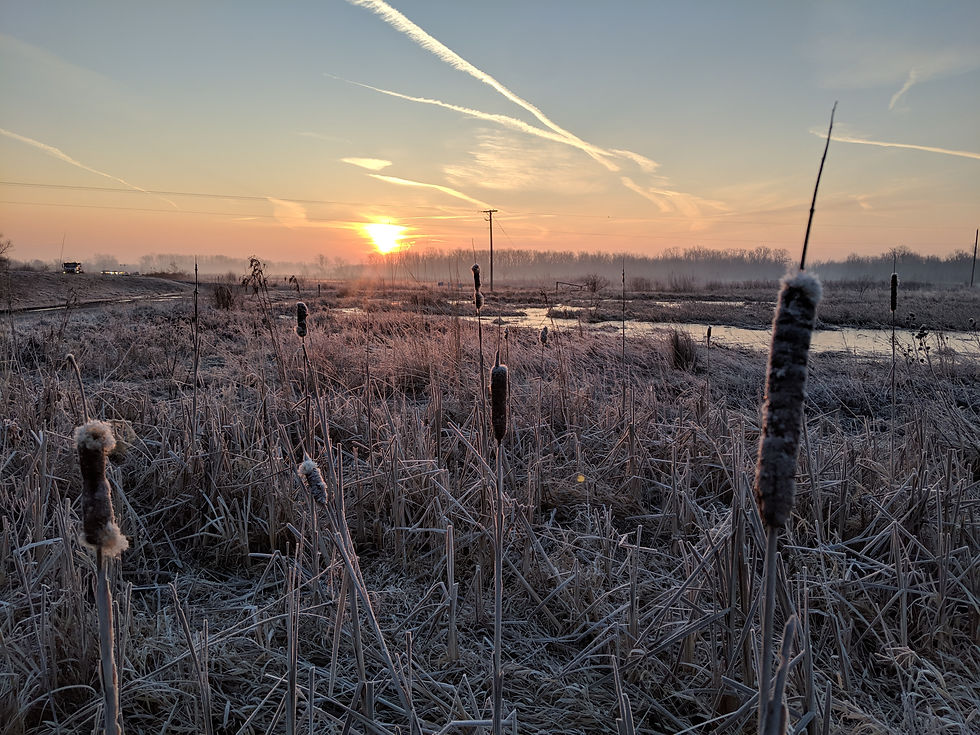
The sun rises over bare treetops, casting light across frost-covered seed heads, giving the wetland a quiet, glittery magic. Winter wetlands can feel especially still. After a prescribed burn at Eagle Marsh, the landscape might even look empty at first glance. But looks can be deceiving. These wetlands are far from inactive.
The wetlands we currently protect and care for primarily fill from precipitation, rain, and snow. Water only enters during high-water events, which means what falls from the sky matters. Snow plays a really important role. Instead of rushing across the land all at once, snow melts slowly, releasing water over time and allowing wetlands to hold onto it. This slow release of water into the landscape gives excess water a place to go during heavy melt and significant rain events.
All of the snow also shows us what we might expect in the spring. As snowmelt combines with early spring rains, shallow areas of the wetland fill in and create vernal pools. These temporary pools are a critical breeding habitat for frogs and salamanders. Vernal pools dry up later in the season and are often free of predators, such as fish, making them safer places for eggs and larvae to grow. What happens in winter shapes whether these pools are available when amphibians need them most.
As someone who loves pond-dipping for tadpoles in the spring with kiddos, these vernal pools have been on my mind a lot. Over the past two years, our area has experienced below normal precipitation. Vernal pools have been drying earlier than usual, which can limit the window of time these critters have to complete their life cycles. So far this year, Fort Wayne has received about 23 inches of precipitation, which is 14 inches below the standard 37 inches. Much of the precipitation we received fell as snow rather than rain. This past fall was the snowiest November since 1966 and the fourth snowiest fall on record. It is a good reminder that when precipitation falls can matter just as much as how much falls.
Even when the wetland looks quiet, plants are still out here doing their thing. Native wetland plants may be dormant above ground, but their root systems are still holding soil in place and storing energy to pop back up in the spring. Plant stems trap drifting snow and slow meltwater. Seed heads also provide food for birds through the winter, while fallen leaves create warm shelter for insects and small animals.
Animals are still here, too, just in less obvious ways. Amphibians overwinter underground, underwater, or beneath leaf litter, waiting for spring wetlands to fill. Insects survive winter as eggs or larvae in soil, water, and even in plant stems. Birds rely on wetlands for winter foraging, while wetland plants store energy in their roots, which muskrats, beavers, and ducks can enjoy as a tasty winter snack. Winter is a season of survival, rest, and preparation.
Despite being frozen, wetlands still work hard. As the Indiana weather pendulum swings between freeze-thaw, they continue to store snowmelt, reduce flooding, filter water, and store carbon in their soils. At Eagle Marsh, which was farmland just 20 years ago, winter snowmelt and rain are significant for helping the wetland fill and support wildlife.
So the next time winter feels quiet, consider visiting one of our preserves. Winter is a great time to explore the wetlands, look for animal tracks, and see how these landscapes continue to work even in the cold.
Sources
Fort Wayne Climatology Report — National Weather Service Fort Wayne Climate Summary (2025 year‑to‑date precipitation and snowfall context) https://www.weather.gov/iwx/climate
Vernal Pools Ecology — EPA overview of vernal pools as seasonal wetlands https://www.epa.gov/wetlands/vernal-pools
Wetland Functions and Services — EPA wetlands functions and values https://www.epa.gov/sites/default/files/2016-02/documents/wetlandfunctionsvalues.pdf
Vernal Pool Habitat Importance — Vernal pools as amphibian breeding habitat hecweb.org https://www.hecweb.org/2025/05/30/vernal-pools-in-indiana-a-hidden-ecological-gem/


I believe you missed the 10" of snow in Dec 1977 and the blizzard of 1978 24" of snow